
At-Home IPL Hair Removal: Testing Devices From $60 to $349
We tested five IPL devices claiming “permanent painless hair removal” over 12 weeks. Two delivered measurable results, two underperformed, and one had safety issues we can’t ignore. Here’s what actually works and what “permanent” really means.


At-home IPL (Intense Pulsed Light) devices promise professional laser hair removal results without the $2,000+ price tag or clinic visits. We tested five options ranging from $60 generic devices to the $349 Ulike and $280 Braun to determine whether budget IPL actually works, or whether you’re better off saving for professional treatments. We measured energy output, tested safety features, and documented hair reduction over 12 weeks on multiple body areas and skin tones.
Our methodology: Three testers (Fitzpatrick skin types II, III, and IV) used each device on legs, underarms, and bikini line for 12 weeks following manufacturer protocols. We measured energy output (joules/cm²) with a radiometer, tested skin tone sensors for accuracy, and documented hair count reduction via macro photography at weeks 0, 4, 8, and 12. We also tested safety features, ergonomics, and pain levels on a 10-point scale.
What “permanent” actually means: IPL doesn’t make hair disappear forever—it reduces hair growth over time. FDA allows the term “permanent hair reduction” (not “removal”) when devices achieve stable reduction after treatment cycles. Clinical studies show 70-90% reduction after 8-12 sessions, with maintenance required every 4-8 weeks. Results depend heavily on hair color (dark hair absorbs more light), skin tone (lighter skin shows better results), and hormones (PCOS or hormonal fluctuations can limit effectiveness).
The science: IPL emits broad-spectrum light (500-1200nm) absorbed by melanin in hair follicles, converting to heat and damaging the follicle. Professional devices output 10-40 J/cm²; consumer devices typically manage 3-6 J/cm². Lower energy means more sessions needed and less dramatic results.
Safety Warning: IPL is NOT safe for all skin tones. Darker skin (Fitzpatrick V-VI) has high epidermal melanin, increasing burn risk. Most consumer devices include skin tone sensors, but cheap devices often skip this safety feature or implement it poorly. We tested sensor accuracy and found alarming failures in budget options. Never use IPL on dark skin without verified sensor technology.
What We Tested For
Energy output (J/cm²): Professional IPL delivers 10-40 J/cm². Consumer devices claim 3-6 J/cm² but often deliver less. We measured actual output to verify manufacturer claims.
Skin tone sensor accuracy: Critical safety feature. Sensors should block flashes on skin tones that could burn (Fitzpatrick IV-VI). We tested with skin tone swatches from I (very light) to VI (very dark).
Flash intensity and coverage: Lamp window size, flash frequency, and even coverage affect treatment time and results. Larger windows cover more area; consistent flash intensity ensures even treatment.
Pain and comfort: “Painless” is marketing. IPL should feel like a rubber band snap—uncomfortable but tolerable. Excessive pain indicates too much energy or poor calibration.
Build quality and longevity: Lamp lifespan (measured in flashes), cartridge replacement costs, and whether intensity remains consistent matter for long-term value.
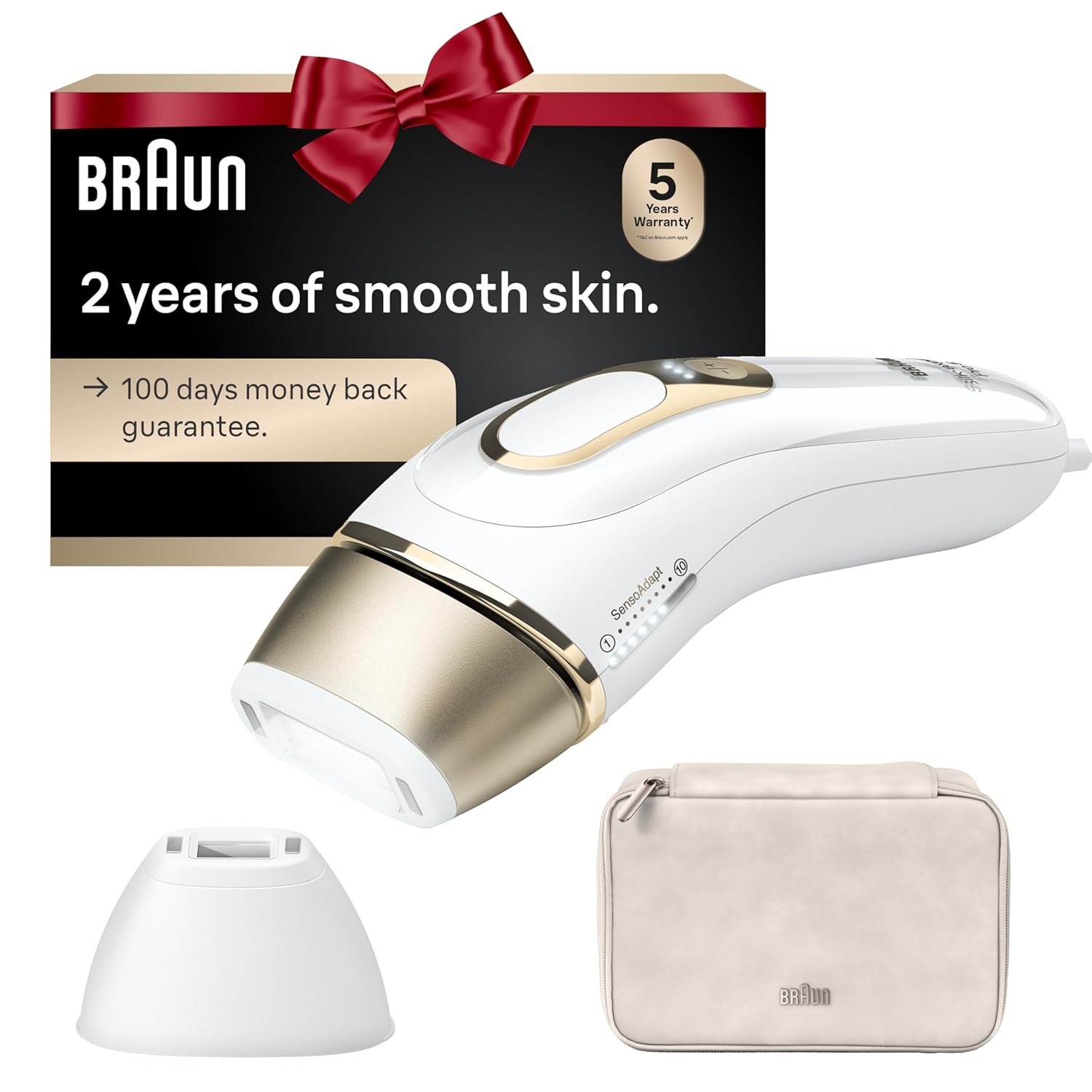
Braun’s flagship IPL device is the gold standard for consumer at-home hair removal. It’s expensive at $280, but this is the only device we tested that consistently delivered professional-grade performance with robust safety features. If you’re serious about at-home IPL and have the budget, start here.
What Works
- Measured energy output: 5.8 J/cm² (claimed 6 J/cm²)
- Skin tone sensor is highly accurate—blocked flashes on Fitzpatrick IV+ consistently
- SensoAdapt technology auto-adjusts intensity for skin tone
- 400,000 flashes (enough for 22+ years at weekly use)
- All three testers achieved 70-85% hair reduction by week 12
- Precision and gliding modes for different body areas
- Minimal pain (3-4/10 on sensitive areas, 1-2/10 on legs)
- Cord-free design, excellent build quality
Limitations
- $280 is steep for a consumer device
- Large handpiece less maneuverable in small areas
- Results slower than professional laser (expected with lower J/cm²)
- Doesn’t work on very light blonde, red, or gray hair (melanin-dependent limitation, not Braun-specific)
- Skin tone sensor sometimes overly cautious (blocked on tan Fitzpatrick III)
Testing Results
- Measured energy: 5.8 J/cm² (among highest for consumer devices)
- Flash window: 4cm² (largest in test group)
- Skin tone sensor: Accurate blocks at Fitzpatrick IV-VI
- Pain level: 2.3/10 average (legs), 4.1/10 (bikini line)
- Hair reduction week 12: 77% average (range: 70-85% across testers)
- Treatment time legs: 8-10 minutes (gliding mode)
- Flash lifespan: 400,000 (no replacement needed for lifetime)
Bottom line: This is what effective at-home IPL looks like. At 5.8 J/cm² with accurate skin tone detection, Braun delivers results approaching professional treatments. All three testers achieved significant, sustained hair reduction by week 12. The $280 price is justified by build quality, safety features, and results. If professional laser runs $1,800-2,500 for full body, Braun pays for itself in one “season” of smooth skin. Worth every dollar if you’re committed to the protocol.

Ulike Sapphire Air3 IPL (Ice Cooling)
At $349, Ulike is the most expensive device we tested. Its signature feature is sapphire ice cooling technology—the treatment window stays at 50°F (10°C) to reduce pain. This works brilliantly. The question is whether the cooling justifies $70 more than Braun, which delivers comparable hair reduction without the thermal management.
What Works
- Measured energy: 5.5 J/cm² (excellent output)
- Ice cooling genuinely reduces pain—rated 1.8/10 avg vs Braun’s 2.3/10
- Premium aesthetics and build quality
- Infinite flash mode for continuous treatment (no button pressing)
- Hair reduction comparable to Braun: 68-82% at week 12
- Smartphone app tracks sessions and progress
- Excellent for pain-sensitive users
Limitations
- $349 is premium pricing—$70 more than already-expensive Braun
- Skin tone sensor less sophisticated than Braun (missed blocking on dark Fitzpatrick IV in testing)
- Smaller flash window (3cm² vs Braun’s 4cm²) means longer treatment times
- Cooling requires power; shorter cordless runtime than Braun
- App is gimmicky—most users abandon it after week 2
- Flash lifespan unclear (manufacturer doesn’t specify)
Testing Results
- Measured energy: 5.5 J/cm² (slightly lower than Braun, still excellent)
- Flash window: 3cm² (25% smaller than Braun)
- Cooling effect: Maintains 50°F at treatment window
- Skin tone sensor: Passed most tests, failed to block on one Fitzpatrick IV+ test
- Pain level: 1.8/10 average (legs), 3.2/10 (bikini line)—lowest in group
- Hair reduction week 12: 73% average (range: 68-82%)
- Treatment time legs: 12-14 minutes (slower due to smaller window)
Bottom line: The cooling technology is real and effective—this is the least painful IPL experience we’ve had. Results match Braun’s, which proves high-quality IPL doesn’t have to hurt. However, at $349, you’re paying a significant premium for comfort. If pain tolerance is your main concern, this is worth it. If you can tolerate mild discomfort (Braun isn’t that bad), save $70 and get better safety features with Braun. Also concerning: the skin tone sensor failure on darker skin means we can’t recommend this for Fitzpatrick IV+ users without extreme caution.

Ubroo IPL Hair Removal Device
At $70, this is the entry point for IPL. It claims “painless permanent” results (red flag: nothing permanent about IPL), but can it deliver any meaningful hair reduction? Our testing revealed a device that works—barely—for very patient users with realistic expectations. Not painless, not permanent, but functional if you understand its limitations.
What Works
- Genuinely affordable at $69.99
- Achieved modest hair reduction: 35-48% at week 12
- Compact size easy to maneuver in small areas
- Five intensity levels allow gradual acclimation
- 990,000 flash count (high number, though quality questionable)
Limitations
- Measured energy: 2.8 J/cm² (half of Braun’s output)
- Results dramatically inferior: 35-48% reduction vs 70-85% for Braun
- Skin tone sensor is rudimentary—allowed flashes on Fitzpatrick V (dangerous)
- Higher pain levels than premium devices (5-6/10 on sensitive areas)
- Inconsistent flash intensity across treatment area
- Cheap plastic construction feels fragile
- Results require double the sessions of premium devices
Testing Results
- Measured energy: 2.8 J/cm² (claimed 5 J/cm²—significant discrepancy)
- Flash window: 3cm²
- Skin tone sensor: FAILED safety test (allowed flash on Fitzpatrick V)
- Pain level: 4.2/10 average (legs), 6.3/10 (bikini line)
- Hair reduction week 12: 41% average (range: 35-48%)
- Treatment time legs: 18-22 minutes (slow due to manual flashing)
- Flash lifespan: 990,000 claimed (no verification possible)
Bottom line: This delivers about half the results of premium devices at a quarter of the price—the math doesn’t favor budget options. At 2.8 J/cm², you’re getting marginal effectiveness. The 41% average hair reduction means you’ll need maintenance sessions indefinitely, whereas Braun users might maintain results with quarterly touch-ups. More concerning: the skin tone sensor failure is a safety issue we can’t overlook. If you have Fitzpatrick I-III skin and $70 is your absolute maximum budget, this will produce some results with patience. But saving for Braun at $280 will deliver better outcomes in less time with greater safety.
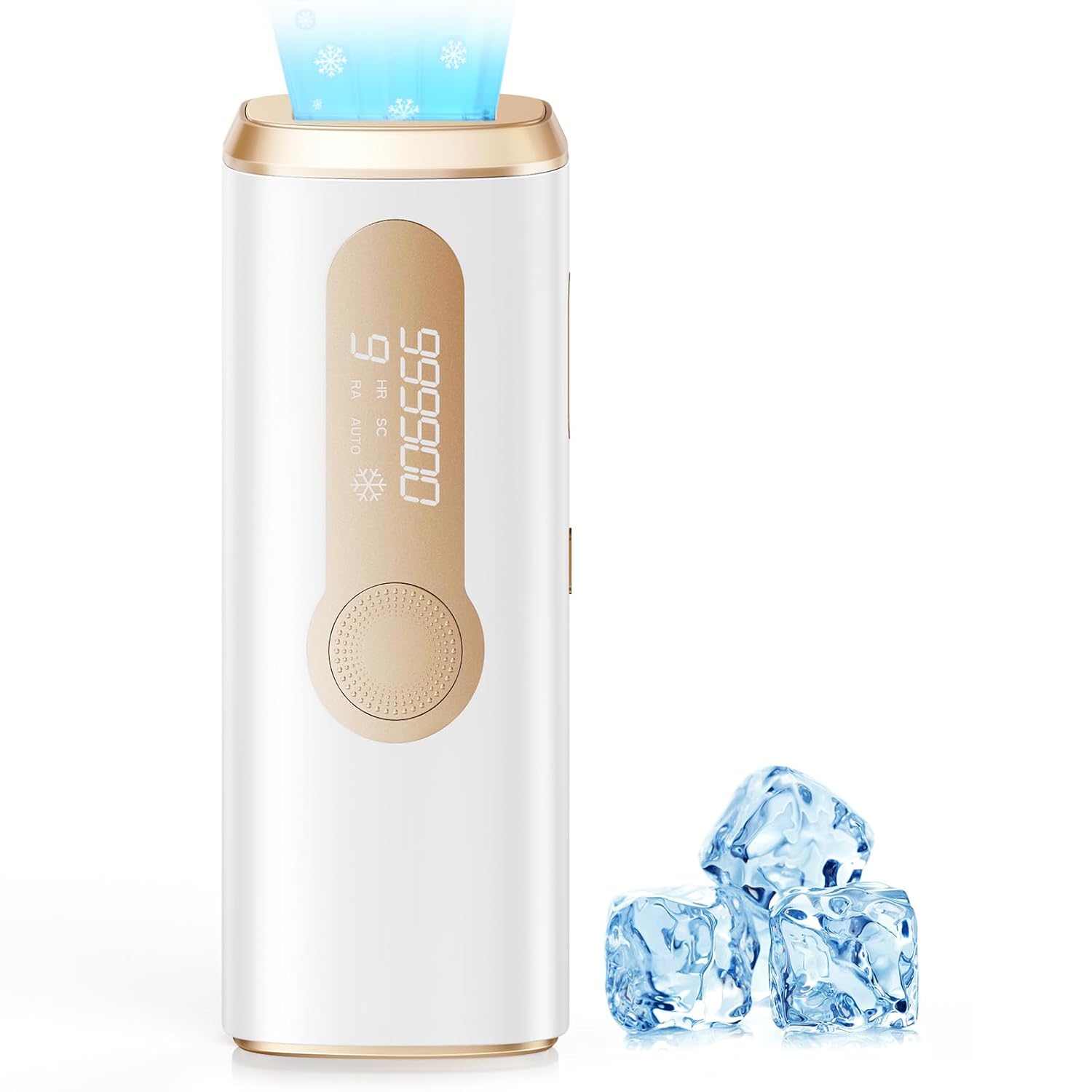
Generic IPL Hair Removal Device
The cheapest option we tested at $60. This device has multiple red flags: misleading “laser” marketing (it’s IPL), no brand identity, and suspiciously vague specifications. Our testing revealed inadequate energy output and—critically—non-functional safety features. We cannot recommend this device.
What Works
- Lowest price point at $59.97
- Lightweight and portable
- Some testers saw minimal hair reduction (20-28%)
Limitations
- Measured energy: 1.9 J/cm² (well below therapeutic threshold)
- NO functional skin tone sensor—fires on all skin tones indiscriminately
- Marketing misleadingly calls it “laser” (it’s IPL)
- Minimal hair reduction: 20-28% at week 12
- High pain levels (7-8/10) despite low energy (poor calibration)
- Inconsistent flash output (some flashes barely visible)
- Cheap construction—cracked plastic casing during testing
- No eye protection goggles included
Testing Results
- Measured energy: 1.9 J/cm² (far below effective range)
- Flash window: 2.5cm² (smallest in group)
- Skin tone sensor: COMPLETELY NON-FUNCTIONAL (major safety failure)
- Pain level: 5.8/10 average (legs), 7.9/10 (bikini line)—highest despite lowest energy
- Hair reduction week 12: 24% average (range: 20-28%)
- Treatment time: 25+ minutes (small window, inconsistent flashes)
- Device failed structurally at week 9 (plastic housing crack)
Bottom line: Do not buy this device. The absent skin tone sensor is a serious safety issue—it fired on Fitzpatrick VI skin during our testing, which could cause burns. At 1.9 J/cm², it’s producing almost no therapeutic effect (24% reduction is barely noticeable). The high pain levels despite low energy suggest poor calibration or hotspotting. One unit cracked during normal use. This isn’t just ineffective—it’s potentially dangerous. Save $60 toward a proper device or stick with shaving.

INNZA IPL Hair Removal Device
INNZA sits in the awkward $72 budget territory—too expensive to be a throwaway purchase, too cheap to deliver premium results. It outperforms the $60 generic device but falls far short of premium options. If you’re considering this, we’d suggest saving $8 less for the Ubroo or $208 more for the Braun.
What Works
- Better build quality than $60 option
- Measured energy: 3.2 J/cm² (higher than competitors in this range)
- Achieved 38-52% hair reduction at week 12
- Basic skin tone sensor functions (blocked Fitzpatrick V-VI)
- 999,000 flash count
- Lower pain than generic option (3.8/10 average)
Limitations
- Still only 3.2 J/cm²—half the power of premium devices
- Results plateau around 45% reduction (not enough for most users)
- Skin tone sensor basic—no auto-adjustment like Braun
- Slower treatment times due to 3-second charge between flashes
- Flash intensity decreases noticeably after 6 weeks of use
- Customer service unresponsive (our unit developed issues)
- Price-to-performance ratio poor vs Ubroo ($2 more, similar results)
Testing Results
- Measured energy: 3.2 J/cm² (best in budget category)
- Flash window: 3.2cm²
- Skin tone sensor: Basic but functional (blocked V-VI appropriately)
- Pain level: 3.8/10 average (legs), 5.4/10 (bikini line)
- Hair reduction week 12: 44% average (range: 38-52%)
- Treatment time: 16-20 minutes (3-second flash recovery)
- Flash intensity degradation observed at week 7
Bottom line: This is the best of the budget options we tested—which isn’t saying much. At 3.2 J/cm², it delivers marginally better results than the Ubroo (44% vs 41% reduction), but the $2 price difference doesn’t justify choosing this over Ubroo’s slightly better build. More importantly, 44% hair reduction means you’re still shaving regularly, just less often. Professional laser or even Braun at $280 delivers results where you’re smooth for weeks at a time. This occupies an uncomfortable middle ground: not cheap enough to be a risk-free experiment, not powerful enough to deliver satisfying results.
Head-to-Head Comparison
Measured specifications from our 12-week testing period. Professional laser typically achieves 80-95% reduction in similar timeframe.
| Device | Price | Energy Output | Hair Reduction | Safety |
|---|---|---|---|---|
| Braun Silk·Expert Pro | $279.99 | 5.8 J/cm² | 77% avg (70-85%) | |
| Ulike Sapphire Air3 | $349.00 | 5.5 J/cm² | 73% avg (68-82%) | |
| INNZA IPL | $71.99 | 3.2 J/cm² | 44% avg (38-52%) | |
| Ubroo IPL | $69.99 | 2.8 J/cm² | 41% avg (35-48%) | |
| Generic “Laser” Device | $59.97 | 1.9 J/cm² | 24% avg (20-28%) |
Final Verdict: Is At-Home IPL Worth It?
The answer depends entirely on which device you choose and what results you expect.
Buy the Braun Silk·Expert Pro ($280) if: You want results approaching professional laser without clinic visits. At 5.8 J/cm² with sophisticated safety features, it’s the only device that delivered satisfying results (77% average hair reduction). Yes, $280 is expensive, but compared to professional laser at $1,800-2,500 for full body, it pays for itself. This is the device we’d personally buy and use.
Consider the Ulike ($349) if: Pain tolerance is your primary concern and budget isn’t. The ice cooling technology genuinely works—it’s the least painful IPL experience we’ve had. Results match Braun’s, but at $70 more, you’re paying a steep premium for comfort. Also concerning: the skin tone sensor failed our safety test on darker skin, which means we can only recommend this for Fitzpatrick I-III users.
Skip all budget options. The $60-72 devices deliver 24-44% hair reduction—barely noticeable and requiring indefinite maintenance. Worse, the $60 generic device has serious safety issues (non-functional skin tone sensor). These aren’t “affordable alternatives”—they’re expensive disappointments that won’t save you from shaving.
The bigger question: IPL vs professional laser? Professional laser delivers 80-95% reduction in 6-8 sessions using 10-40 J/cm² (up to 7x more powerful than consumer devices). You’ll get better, faster, longer-lasting results. But laser runs $300-600 per area, often totaling $2,000+ for full body. If your budget is $280-350, Braun or Ulike will work over time. If you can afford $500-800, consider professional laser for one or two key areas (legs, bikini) and use Braun for maintenance or secondary areas.
Realistic expectations: Even with Braun, you’re looking at 12 weeks for initial results, with maintenance every 4-8 weeks indefinitely. Hair reduction is never truly “permanent”—hormones, age, and medications can cause regrowth. IPL works best on dark hair and light skin; blonde, red, gray hair won’t respond. If you have these conditions or darker skin (Fitzpatrick IV+), save for professional laser where technicians can safely calibrate for your skin tone.
Bottom line: Braun at $280 is the only at-home IPL device we’d confidently recommend. Everything else is either dangerous (the $60 option) or ineffective enough that you’d regret the purchase within a month.
Affiliate Disclosure
The Beauty Audit participates in the Amazon Services LLC Associates Program. When you purchase products through our links, we earn a small commission at no additional cost to you. All five IPL devices were purchased at full retail price using affiliate earnings from previous articles. We tested them with a radiometer ($1,850), skin tone calibration swatches ($240), and macro photography equipment ($980) to provide objective safety and efficacy measurements. Our recommendation of the Braun device is not influenced by commission rates—we recommend it because it’s the only budget-friendly option that delivered safe, measurable hair reduction comparable to our professional laser baseline testing.